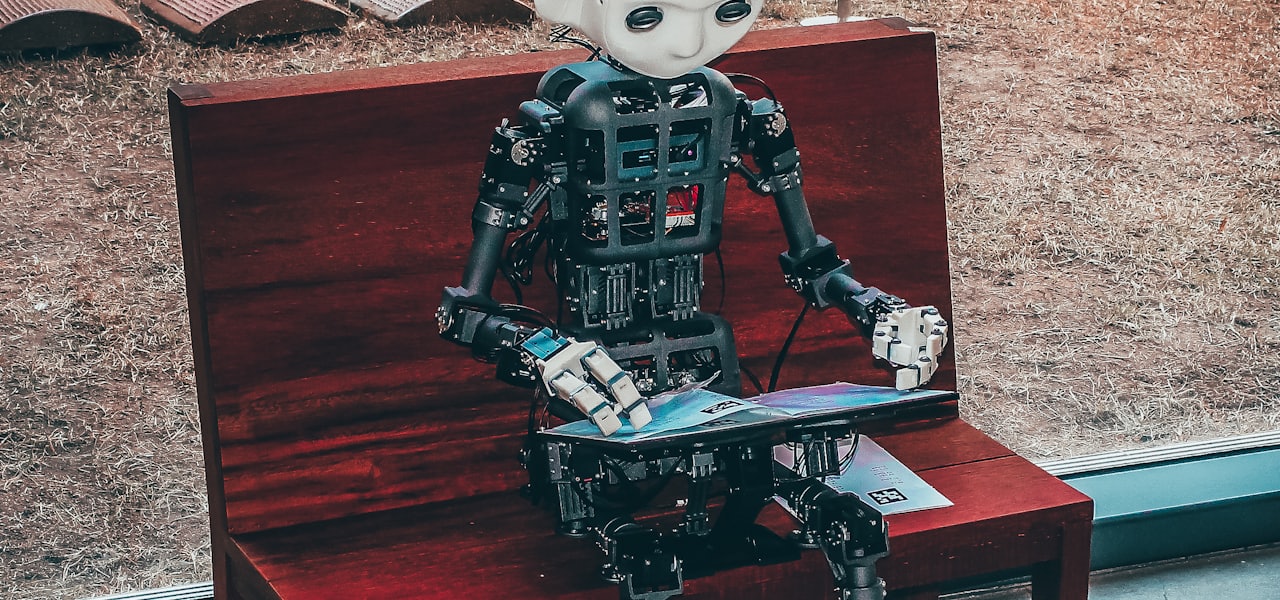
Regulation of algorithms, or algorithmic regulation, is the creation of laws, rules and public sector policies for promotion and regulation of algorithms, particularly in artificial intelligence and machine learning. For the subset of AI algorithms, the term regulation of artificial intelligence is used. The regulatory and policy landscape for artificial intelligence (AI) is an emerging issue in jurisdictions globally, including in the European Union. Regulation of AI is considered necessary to both encourage AI and manage associated risks, but challenging. Another emerging topic is the regulation of blockchain algorithms (Use of the smart contracts must be regulated) and is mentioned along with regulation of AI algorithms. Many countries have enacted regulations of high frequency trades, which is shifting due to technological progress into the realm of AI algorithms. The motivation for regulation of algorithms is the apprehension of losing control over the algorithms, whose impact on human life increases. Multiple countries have already introduced regulations in case of automated credit score calculation—right to explanation is mandatory for those algorithms. For example, The IEEE has begun developing a new standard to explicitly address ethical issues and the values of potential future users. Bias, transparency, and ethics concerns have emerged with respect to the use of algorithms in diverse domains ranging from criminal justice to healthcare—many fear that artificial intelligence could replicate existing social inequalities along race, class, gender, and sexuality lines. == Regulation of artificial intelligence == === Public discussion === In 2016, Joy Buolamwini founded Algorithmic Justice League after a personal experience with biased facial detection software in order to raise awareness of the social implications of artificial intelligence through art and research. In 2017 Elon Musk advocated regulation of algorithms in the context of the existential risk from artificial general intelligence. According to NPR, the Tesla CEO was "clearly not thrilled" to be advocating for government scrutiny that could impact his own industry, but believed the risks of going completely without oversight are too high: "Normally the way regulations are set up is when a bunch of bad things happen, there's a public outcry, and after many years a regulatory agency is set up to regulate that industry. It takes forever. That, in the past, has been bad but not something which represented a fundamental risk to the existence of civilisation." In response, some politicians expressed skepticism about the wisdom of regulating a technology that is still in development. Responding both to Musk and to February 2017 proposals by European Union lawmakers to regulate AI and robotics, Intel CEO Brian Krzanich has argued that artificial intelligence is in its infancy and that it is too early to regulate the technology. Instead of trying to regulate the technology itself, some scholars suggest to rather develop common norms including requirements for the testing and transparency of algorithms, possibly in combination with some form of warranty. One suggestion has been for the development of a global governance board to regulate AI development. In 2020, the European Union published its draft strategy paper for promoting and regulating AI. Algorithmic tacit collusion is a legally dubious antitrust practise committed by means of algorithms, which the courts are not able to prosecute. This danger concerns scientists and regulators in EU, US and beyond. European Commissioner Margrethe Vestager mentioned an early example of algorithmic tacit collusion in her speech on "Algorithms and Collusion" on March 16, 2017, described as follows: "A few years ago, two companies were selling a textbook called The Making of a Fly. One of those sellers used an algorithm which essentially matched its rival’s price. That rival had an algorithm which always set a price 27% higher than the first. The result was that prices kept spiralling upwards, until finally someone noticed what was going on, and adjusted the price manually. By that time, the book was selling – or rather, not selling – for 23 million dollars a copy." In 2018, the Netherlands employed an algorithmic system SyRI (Systeem Risico Indicatie) to detect citizens perceived being high risk for committing welfare fraud, which quietly flagged thousands of people to investigators. This caused a public protest. The district court of Hague shut down SyRI referencing Article 8 of the European Convention on Human Rights (ECHR). In 2020, algorithms assigning exam grades to students in the UK sparked open protest under the banner "Fuck the algorithm." This protest was successful and the grades were taken back. In 2024, the Munich Convention on AI, Data and Human Rights was introduced as part of growing international efforts to regulate artificial intelligence through a human rights lens. Developed through a collaborative drafting process involving scholars from the Technical University of Munich, Stellenbosch University, Ulster University, and KNUST, the initiative calls for an international conversation on a binding treaty to safeguard human rights and the principles enshrined in the UN Charter in the age of AI. === Implementation === AI law and regulations can be divided into three main topics, namely governance of autonomous intelligence systems, responsibility and accountability for the systems, and privacy and safety issues. The development of public sector strategies for management and regulation of AI has been increasingly deemed necessary at the local, national, and international levels and in fields from public service management to law enforcement, the financial sector, robotics, the military, and international law. There are many concerns that there is not enough visibility and monitoring of AI in these sectors. In the United States financial sector, for example, there have been calls for the Consumer Financial Protection Bureau to more closely examine source code and algorithms when conducting audits of financial institutions' non-public data. In the United States, on January 7, 2019, following an Executive Order on 'Maintaining American Leadership in Artificial Intelligence', the White House's Office of Science and Technology Policy released a draft Guidance for Regulation of Artificial Intelligence Applications, which includes ten principles for United States agencies when deciding whether and how to regulate AI. In response, the National Institute of Standards and Technology has released a position paper, the National Security Commission on Artificial Intelligence has published an interim report, and the Defense Innovation Board has issued recommendations on the ethical use of AI. In April 2016, for the first time in more than two decades, the European Parliament adopted a set of comprehensive regulations for the collection, storage, and use of personal information, the General Data Protection Regulation (GDPR)1 (European Union, Parliament and Council 2016). The GDPR's policy on the right of citizens to receive an explanation for algorithmic decisions highlights the pressing importance of human interpretability in algorithm design. In 2016, China published a position paper questioning the adequacy of existing international law to address the eventuality of fully autonomous weapons, becoming the first permanent member of the U.N. Security Council to broach the issue, and leading to proposals for global regulation. In the United States, steering on regulating security-related AI is provided by the National Security Commission on Artificial Intelligence. In 2017, the U.K. Vehicle Technology and Aviation Bill imposes liability on the owner of an uninsured automated vehicle when driving itself and makes provisions for cases where the owner has made "unauthorized alterations" to the vehicle or failed to update its software. Further ethical issues arise when, e.g., a self-driving car swerves to avoid a pedestrian and causes a fatal accident. In 2021, the European Commission proposed the Artificial Intelligence Act. == Algorithm certification == There is a concept of algorithm certification emerging as a method of regulating algorithms. Algorithm certification involves auditing whether the algorithm used during the life cycle 1) conforms to the protocoled requirements (e.g., for correctness, completeness, consistency, and accuracy); 2) satisfies the standards, practices, and conventions; and 3) solves the right problem (e.g., correctly model physical laws), and satisfies the intended use and user needs in the operational environment. == Regulation of blockchain algorithms == Blockchain systems provide transparent and fixed records of transactions and hereby contradict the goal of the European GDPR, which is to give individuals full control of their private data. By implementing the Decree on Development of Digital Economy, Bel
CPT Corporation
CPT Corporation was founded in 1971 by Dean Scheff in Minneapolis, Minnesota, with co-founders James Wienhold and Richard Eichhorn. CPT first designed, manufactured, and marketed the CPT 4200, a dual-cassette-tape machine that controlled a modified IBM Selectric typewriter to support text editing and word processing. The CPT 4200 was followed in 1976 by the CPT VM (Visual Memory), a partial-page display-screen dual-cassette-tape unit, and shortly thereafter by the CPT 8000, a full-page display dual-diskette desktop microcomputer that drove stand-alone daisy wheel printers. Subsequent products included (1) variants on the 8000 series; (2) the CPT 6000 series, which had a lower capacity, smaller screen, and was less expensive; (3) the CPT 9000 series, which had a larger capacity and could run IBM personal computer software; (4) the CPT Phoenix series, which had a graphical capabilities; (5) CPT PT, a software-only reduced version that ran on IBM personal computers and clones; and (6) other related products. The CPT logo—originally three letters chosen to sound well together—began to be taken as an acronym for "cassette powered typewriting," and subsequently for "computer processed text," and numerous other variants. Major competition was IBM, Wang, Lanier, Xerox, and other word processing vendors. CPT Corporation was fifth in size among Minnesota-based top high-tech companies, after 3M, Honeywell, Control Data, and Medtronic. Corporate revenues grew to approximately a quarter-billion dollars per year in the mid-1980s, then declined with the proliferation of personal computers. CPT ultimately ceased major manufacturing late in the 20th century. == Selected products == === Cassette based === The CPT 4200 was a dual-cassette-tape unit with a small built-in keyboard that controlled a modified IBM Selectric typewriter. Keystrokes entered on the typewriter appeared on the paper as they were recorded on the output cassette, which formed a magnetic replica of the characters printed on the page. That output cassette could later be used as an input cassette, where it would be played back to the typewriter along with new keystrokes to accomplish text editing. The keyboard of the CPT 4200 had action keys for "skip", "read" and "stop", mode keys for "word", "line", "paragraph," and "page." Pressing "read" transferred a word, line, paragraph, or page (depending on which mode key had been selected) from the input tape to both the typewriter and the output tape. Line boundaries (aka printer margins) recorded on the input tape were ignored or retained depending on whether or not the "adjust" key had been selected. Alternatively, pressing "skip" moved past the corresponding amount of text on the input tape without sending it to the typewriter or to the output tape. The Selectric's keyboard was active for any new typing, which would appear on the paper and transferred to the output tape. Thus a document was edited by reading back those parts of the text to be retained and skipping those parts to be discarded, with new typing added from the Selectric's keyboard. Price: approx. $5000, 1980-era values. The CPT Communicator was an add-on to the CPT 4200 that allowed data to be transferred from one text-editing machine to another, or between a text-editing machine and a remote computer, via phone lines. Price: not available. === Microprocessor based === ==== CPT 8000 series ==== The CPT 8000 was the company's first microcomputer product, exhibited in spring of 1976. It was a self-contained desktop machine with two 8-inch floppy diskette drives, a movable keyboard, and a full-page vertically oriented CRT display simulating paper with black characters on a white background, for a wysiwyg view of text on paper. It was promoted as familiar and easy to use for those experienced with typewriters. A keyboard with a large set of extra keys made operating the 8000 quite easy even for people without any computer skills or background. IN, OUT, PRINT, OOPS OOPS was changed thinking it was insulting to the buyer to assume they would ever make an error. The CPT 8000 was designed to show a full page of text with a static line showing the margin and tab stops. An additional line would display status or error messages with a times square like display. The times square error and status messages were very well done, "The printer needs a new ribbon" rather than "ERROR 034892". The text page could both smooth pan and scroll by the hardware in the display board and nothing quite like it existed for a very long time. The 8000 ran its own multitasking hardware interrupt-driven operating system but it also ran CP/M quite well. So unlike other companies that sold Wordprocessor only systems, CPT had a system that could run any of the many popular CP/M applications. Using the CP/M OS users could develop Fortran, CBasic, Cobol and other language's programs. The 8000 used Intel's 8080 microprocessor. The display board was bleeding-edge, high-speed logic. The parts available at this time were pushed to their limits to provide the speed needed to display this much text. There were times that batches of parts from one manufacturer simply could not be clocked as fast as the 8000 display required. Memory was initially 64K, but larger boards of 128K were most common then later 256K were offered. The 8080 accessed this additional RAM by running a custom page flipping circuit. The 8000 was originally priced at $8000 and its daisy wheel printer an additional $8000. The model number having been confused with the price at its first appearance at the Hanover fair. An RS-232 serial communication option was available for the 8000 series that allowed the electronic transfer of documents. One very popular use of this was to access the Westlaw system. A tempest approved version of the 8000 was developed that was RF tight with nothing being emitted that could be monitored or spied on. === Storage Systems === ==== CPT WordPak ==== The CPT WordPak series was CPT's first external document storage system that enabled multiple 8000 series workstations to store documents in an electronic filing cabinet. Prior to WordPak, all documents were stored on removable 8-inch floppy diskettes. Sharing documents involved handing off the original disk, or copying the document to a second disk and 'sneaker-net-ing' (walking it over) to the second 8000. But this resulted in two copies of the document, one at each workstation. A circuit board with a proprietary cable connector was installed in the 8000/6000 family of "workstations" and connected to the WordPak by a multi-conductor cable. WordPak 1 consisted of a single Shugart Associates SA4000 14"-diameter hard disk with a capacity of 30 megabytes. WordPak 2 added a 2nd drive for a total of 60 megabytes. ==== CPT SRS 45 ==== The CPT SRS 45 was what would now be called a server (quite likely the first of its kind) but in practice was much more. It was maybe the worlds easiest networking shared resource system. It combined a ZIP drive for backup and hard disk(s) that would be shared simultaneously by up to eight CPT machines that had the PC AT bus. The primary person responsible for its development was Bill Davidson whose wife Cheryl was responsible for bringing up CP/M, MP/M and other Digital Research products running on the Phoenix. The brilliance of the system were the networking cards that plugged into the individual machines. These used the 55AA installable driver of the IBM BIOS to simply add the zip and hard disk drives to each computers drives list. So a system that started with floppy drives A and B and a C hard disk on the machine would have the SRS 45 drives added as drives D (E, F depending on the number of hard disk) and Z for the zip drive. Sharing (avoiding writing to the same file at the same time) was handled by simply assigning parts of the drives for individuals and other directories for shared use. No "driver" software was needed. You simply plugged in the networking card and your machine had additional drives that were internal to the SRS45. This approach was far ahead of its time and sadly never recognized for its brilliance. The SRS45 as were all CPT machines not just dedicated Word Processors. === Personal-computer based === ==== CPT PT software ==== CPT PT was a reduced a version of the software that ran under MS-DOS as an application on IBM PC compatible computers. The corporation intended it as a bridge to allow data to flow in and out of personal computer packages, as well as providing a personal-computer word processing application for those familiar with standalone CPT equipment or who preferred the CPT style of dual-window text editing. Price: approx. $200, 1980-era values. ==== CPT Genius Display ==== The Genius display was a stand-alone, vertically-oriented (portrait) configuration monochrome grey-scale CRT monitor unit and an IBM PC form factor display card to allow high-resolution, full-page text & graphics on IBM PC compatible computers.
Generative AI Copyright Disclosure Act
The Generative AI Copyright Disclosure Act is a piece of legislation introduced by California Representative Adam Schiff in the United States Congress on April 9, 2024. It concerns the transparency of companies regarding their use of copyrighted work to train their generative artificial intelligence (AI) models. The legislation requires the submission of a notice regarding the identity and the uniform resource locator (URL) address of the copyrighted works used in the training data to the Register of Copyrights at least 30 days before the public release of the new or updated version of the AI model; it does not ban the use of copyrighted works for AI training. The bill's requirements would apply retroactively to prior AI models. Violation penalties would start at US$5,000. The legislation does not have a maximum penalty assessment that can be charged. The bill by Schiff was introduced a few days after The New York Times published an article regarding the business activities of major tech firms, including Google and Meta, in the training of their generative AI platforms on April 6, 2024. The legislation is supported by the Professional Photographers of America (PPA), SAG-AFTRA, the Writers Guild of America, the International Alliance of Theatrical Stage Employees (IATSE), the Recording Industry Association of America (RIAA), and others.
AlphaZero
AlphaZero is a computer program developed by artificial intelligence research company DeepMind to master the games of chess, shogi and go. This algorithm uses an approach similar to AlphaGo Zero. On December 5, 2017, the DeepMind team released a preprint paper introducing AlphaZero, which would soon play three games by defeating world-champion chess engines Stockfish, Elmo, and the three-day version of AlphaGo Zero. In each case it made use of custom tensor processing units (TPUs) that the Google programs were optimized to use. AlphaZero was trained solely via self-play using 5,000 first-generation TPUs to generate the games and 64 second-generation TPUs to train the neural networks, all in parallel, with no access to opening books or endgame tables. After four hours of training, DeepMind estimated AlphaZero was playing chess at a higher Elo rating than Stockfish 8; after nine hours of training, the algorithm defeated Stockfish 8 in a time-controlled 100-game tournament (28 wins, 0 losses, and 72 draws). The trained algorithm played on a single machine with four TPUs. DeepMind's paper on AlphaZero was published in the journal Science on 7 December 2018. While the actual AlphaZero program has not been released to the public, the algorithm described in the paper has been implemented in publicly available software. In 2019, DeepMind published a new paper detailing MuZero, a new algorithm able to generalize AlphaZero's work, playing both Atari and board games without knowledge of the rules or representations of the game. == Relation to AlphaGo Zero == AlphaZero (AZ) is a more generalized variant of the AlphaGo Zero (AGZ) algorithm, and is able to play shogi and chess as well as Go. Differences between AZ and AGZ include: AZ has hard-coded rules for setting search hyperparameters. The neural network is now updated continually. AZ doesn't use symmetries, unlike AGZ. Chess or Shogi can end in a draw unlike Go; therefore, AlphaZero takes into account the possibility of a drawn game. == Stockfish and Elmo == Comparing Monte Carlo tree search searches, AlphaZero searches just 80,000 positions per second in chess and 40,000 in shogi, compared to 70 million for Stockfish and 35 million for Elmo. AlphaZero compensates for the lower number of evaluations by using its deep neural network to focus much more selectively on the most promising variation. == Training == AlphaZero was trained by simply playing against itself multiple times, using 5,000 first-generation TPUs to generate the games and 64 second-generation TPUs to train the neural networks. In parallel, the in-training AlphaZero was periodically matched against its benchmark (Stockfish, Elmo, or AlphaGo Zero) in brief one-second-per-move games to determine how well the training was progressing. DeepMind judged that AlphaZero's performance exceeded the benchmark after around four hours of training for Stockfish, two hours for Elmo, and eight hours for AlphaGo Zero. == Preliminary results == === Outcome === ==== Chess ==== In AlphaZero's chess match against Stockfish 8 (2016 TCEC world champion), each program was given one minute per move. AlphaZero was flying the English flag, while Stockfish the Norwegian. Stockfish was allocated 64 threads and a hash size of 1 GB, a setting that Stockfish's Tord Romstad later criticized as suboptimal. AlphaZero was trained on chess for a total of nine hours before the match. During the match, AlphaZero ran on a single machine with four application-specific TPUs. In 100 games from the normal starting position, AlphaZero won 25 games as White, won 3 as Black, and drew the remaining 72. In a series of twelve, 100-game matches (of unspecified time or resource constraints) against Stockfish starting from the 12 most popular human openings, AlphaZero won 290, drew 886 and lost 24. ==== Shogi ==== AlphaZero was trained on shogi for a total of two hours before the tournament. In 100 shogi games against Elmo (World Computer Shogi Championship 27 summer 2017 tournament version with YaneuraOu 4.73 search), AlphaZero won 90 times, lost 8 times and drew twice. As in the chess games, each program got one minute per move, and Elmo was given 64 threads and a hash size of 1 GB. ==== Go ==== After 34 hours of self-learning of Go and against AlphaGo Zero, AlphaZero won 60 games and lost 40. === Analysis === DeepMind stated in its preprint, "The game of chess represented the pinnacle of AI research over several decades. State-of-the-art programs are based on powerful engines that search many millions of positions, leveraging handcrafted domain expertise and sophisticated domain adaptations. AlphaZero is a generic reinforcement learning algorithm – originally devised for the game of go – that achieved superior results within a few hours, searching a thousand times fewer positions, given no domain knowledge except the rules." DeepMind's Demis Hassabis, a chess player himself, called AlphaZero's play style "alien": It sometimes wins by offering counterintuitive sacrifices, like offering up a queen and bishop to exploit a positional advantage. "It's like chess from another dimension." Given the difficulty in chess of forcing a win against a strong opponent, the +28 –0 =72 result is a significant margin of victory. However, some grandmasters, such as Hikaru Nakamura and Komodo developer Larry Kaufman, downplayed AlphaZero's victory, arguing that the match would have been closer if the programs had access to an opening database (since Stockfish was optimized for that scenario). Romstad additionally pointed out that Stockfish is not optimized for rigidly fixed-time moves and the version used was a year old. Similarly, some shogi observers argued that the Elmo hash size was too low, that the resignation settings and the "EnteringKingRule" settings (cf. shogi § Entering King) may have been inappropriate, and that Elmo is already obsolete compared with newer programs. === Reaction and criticism === Papers headlined that the chess training took only four hours: "It was managed in little more than the time between breakfast and lunch." Wired described AlphaZero as "the first multi-skilled AI board-game champ". AI expert Joanna Bryson noted that Google's "knack for good publicity" was putting it in a strong position against challengers. "It's not only about hiring the best programmers. It's also very political, as it helps make Google as strong as possible when negotiating with governments and regulators looking at the AI sector." Human chess grandmasters generally expressed excitement about AlphaZero. Danish grandmaster Peter Heine Nielsen likened AlphaZero's play to that of a superior alien species. Norwegian grandmaster Jon Ludvig Hammer characterized AlphaZero's play as "insane attacking chess" with profound positional understanding. Former champion Garry Kasparov said, "It's a remarkable achievement, even if we should have expected it after AlphaGo." Grandmaster Hikaru Nakamura was less impressed, stating: "I don't necessarily put a lot of credibility in the results simply because my understanding is that AlphaZero is basically using the Google supercomputer and Stockfish doesn't run on that hardware; Stockfish was basically running on what would be my laptop. If you wanna have a match that's comparable you have to have Stockfish running on a supercomputer as well." Top US correspondence chess player Wolff Morrow was also unimpressed, claiming that AlphaZero would probably not make the semifinals of a fair competition such as TCEC where all engines play on equal hardware. Morrow further stated that although he might not be able to beat AlphaZero if AlphaZero played drawish openings such as the Petroff Defence, AlphaZero would not be able to beat him in a correspondence chess game either. Motohiro Isozaki, the author of YaneuraOu, noted that although AlphaZero did comprehensively beat Elmo, the rating of AlphaZero in shogi stopped growing at a point which is at most 100–200 higher than Elmo. This gap is not that high, and Elmo and other shogi software should be able to catch up in 1–2 years. == Final results == DeepMind addressed many of the criticisms in their final version of the paper, published in December 2018 in Science. They further clarified that AlphaZero was not running on a supercomputer; it was trained using 5,000 tensor processing units (TPUs), but only ran on four TPUs and a 44-core CPU in its matches. === Chess === In the final results, Stockfish 9 dev ran under the same conditions as in the TCEC superfinal: 44 CPU cores, Syzygy endgame tablebases, and a 32 GB hash size. Instead of a fixed time control of one move per minute, both engines were given 3 hours plus 15 seconds per move to finish the game. AlphaZero ran on a much more powerful machine with four TPUs in addition to 44 CPU cores. In a 1000-game match, AlphaZero won with a score of 155 wins, 6 losses, and 839 draws. DeepMind also played a series of games using the TCEC opening positions; AlphaZero also won
OpenCog
OpenCog is a project that aims to build an open source artificial intelligence framework. OpenCog Prime is an architecture for robot and virtual embodied cognition that defines a set of interacting components designed to give rise to human-equivalent artificial general intelligence (AGI) as an emergent phenomenon of the whole system. OpenCog Prime's design is primarily the work of Ben Goertzel while the OpenCog framework is intended as a generic framework for broad-based AGI research. Research utilizing OpenCog has been published in journals and presented at conferences and workshops including the annual Conference on Artificial General Intelligence. OpenCog is released under the terms of the GNU Affero General Public License. OpenCog is in use by more than 50 companies, including Huawei and Cisco. == Origin == OpenCog was originally based on the release in 2008 of the source code of the proprietary "Novamente Cognition Engine" (NCE) of Novamente LLC. The original NCE code is discussed in the PLN book (ref below). Ongoing development of OpenCog is supported by Artificial General Intelligence Research Institute (AGIRI), the Google Summer of Code project, Hanson Robotics, SingularityNET and others. == Components == OpenCog consists of: A graph database, dubbed the AtomSpace, that holds "atoms" (that is, terms, atomic formulas, sentences and relationships) together with their "values" (valuations or interpretations, which can be thought of as per-atom key-value databases). An example of a value would be a truth value. Atoms are globally unique, immutable and are indexed (searchable); values are fleeting and changeable. A collection of pre-defined atoms, termed Atomese, used for generic knowledge representation, such as conceptual graphs and semantic networks, as well as to represent and store the rules (in the sense of term rewriting) needed to manipulate such graphs. A collection of pre-defined atoms that encode a type subsystem, including type constructors and function types. These are used to specify the types of variables, terms and expressions, and are used to specify the structure of generic graphs containing variables. A collection of pre-defined atoms that encode both functional and imperative programming styles. These include the lambda abstraction for binding free variables into bound variables, as well as for performing beta reduction. A collection of pre-defined atoms that encode a satisfiability modulo theories solver, built in as a part of a generic graph query engine, for performing graph and hypergraph pattern matching (isomorphic subgraph discovery). This generalizes the idea of a structured query language (SQL) to the domain of generic graphical queries; it is an extended form of a graph query language. A generic rule engine, including a forward chainer and a backward chainer, that is able to chain together rules. The rules are exactly the graph queries of the graph query subsystem, and so the rule engine vaguely resembles a query planner. It is designed so as to allow different kinds of inference engines and reasoning systems to be implemented, such as Bayesian inference or fuzzy logic, or practical tasks, such as constraint solvers or motion planners. An attention allocation subsystem based on economic theory, termed ECAN. This subsystem is used to control the combinatorial explosion of search possibilities that are met during inference and chaining. An implementation of a probabilistic reasoning engine based on probabilistic logic networks. The current implementation uses the rule engine to chain together specific rules of logical inference (such as modus ponens), together with some very specific mathematical formulas assigning a probability and a confidence to each deduction. This subsystem can be thought of as a certain kind of proof assistant that works with a modified form of Bayesian inference. A probabilistic genetic program evolver called Meta-Optimizing Semantic Evolutionary Search, or MOSES. This is used to discover collections of short Atomese programs that accomplish tasks; these can be thought of as performing a kind of decision tree learning, resulting in a kind of decision forest, or rather, a generalization thereof. A natural language input system consisting of Link Grammar, and partly inspired by both Meaning-Text Theory as well as Dick Hudson's Word Grammar, which encodes semantic and syntactic relations in Atomese. A natural language generation system. An implementation of Psi-Theory for handling emotional states, drives and urges, dubbed OpenPsi. Interfaces to Hanson Robotics robots, including emotion modelling via OpenPsi. This includes the Loving AI project, used to demonstrate meditation techniques. == Organization and funding == In 2008, the Machine Intelligence Research Institute (MIRI), formerly called Singularity Institute for Artificial Intelligence (SIAI), sponsored several researchers and engineers. Many contributions from the open source community have been made since OpenCog's involvement in the Google Summer of Code in 2008 and 2009. Currently MIRI no longer supports OpenCog. OpenCog has received funding and support from several sources, including the Hong Kong government, Hong Kong Polytechnic University, the Jeffrey Epstein VI Foundation and Hanson Robotics. In 2013, OpenCog began providing AI solutions to Hanson Robotics, and in 2017, OpenCog became a founding member of SingularityNET. == Applications == Similar to other cognitive architectures, the main purpose is to create virtual humans, which are three dimensional avatar characters. The goal is to mimic behaviors like emotions, gestures and learning. For example, the emotion module in the software was only programmed because humans have emotions. Artificial General Intelligence can be realized if it simulates intelligence of humans. The self-description of the OpenCog project provides additional possible applications which are going into the direction of natural language processing and the simulation of a dog.
Visual analytics
Visual analytics is a multidisciplinary science and technology field that emerged from information visualization and scientific visualization. It focuses on how analytical reasoning can be facilitated by interactive visual interfaces. == Overview == Visual analytics is "the science of analytical reasoning facilitated by interactive visual interfaces." It can address problems whose size, complexity, and need for closely coupled human and machine analysis may make them otherwise intractable. Visual analytics advances scientific and technological development across multiple domains, including analytical reasoning, human–computer interaction, data transformations, visual representation for computation and analysis, analytic reporting, and the transition of new technologies into practice. As a research agenda, visual analytics brings together several scientific and technical communities from computer science, information visualization, cognitive and perceptual sciences, interactive design, graphic design, and social sciences. Visual analytics integrates new computational and theory-based tools with innovative interactive techniques and visual representations to enable human-information discourse. The design of the tools and techniques is based on cognitive, design, and perceptual principles. This science of analytical reasoning provides the reasoning framework upon which one can build both strategic and tactical visual analytics technologies for threat analysis, prevention, and response. Analytical reasoning is central to the analyst's task of applying human judgments to reach conclusions from a combination of evidence and assumptions. Visual analytics has some overlapping goals and techniques with information visualization and scientific visualization. There is currently no clear consensus on the boundaries between these fields, but broadly speaking the three areas can be distinguished as follows: Scientific visualization deals with data that has a natural geometric structure (e.g., MRI data, wind flows). Information visualization handles abstract data structures such as trees or graphs. Visual analytics is especially concerned with coupling interactive visual representations with underlying analytical processes (e.g., statistical procedures, data mining techniques) such that high-level, complex activities can be effectively performed (e.g., sense making, reasoning, decision making). Visual analytics seeks to marry techniques from information visualization with techniques from computational transformation and analysis of data. Information visualization forms part of the direct interface between user and machine, amplifying human cognitive capabilities in six basic ways: by increasing cognitive resources, such as by using a visual resource to expand human working memory, by reducing search, such as by representing a large amount of data in a small space, by enhancing the recognition of patterns, such as when information is organized in space by its time relationships, by supporting the easy perceptual inference of relationships that are otherwise more difficult to induce, by perceptual monitoring of a large number of potential events, and by providing a manipulable medium that, unlike static diagrams, enables the exploration of a space of parameter values These capabilities of information visualization, combined with computational data analysis, can be applied to analytic reasoning to support the sense-making process. == History == As an interdisciplinary approach, visual analytics has its roots in information visualization, cognitive sciences, and computer science. The term and scope of the field was defined in the early 2000s through researchers such as Jim Thomas, Kristin A. Cook, John Stasko, Pak Chung Wong, Daniel A. Keim and David S. Ebert. As a reaction to the September 11, 2001 attacks the United States Department of Homeland Security was established in late 2002, combining dozens of previously separated government agencies. Building upon earlier work on visual data mining by Daniel A. Keim starting in the late 1990s, this simultaneously lead to the development of a research agenda for visual analytics. As part of these efforts the National Visualization and Analytics Center (NVAC) at Pacific Northwest National Laboratory was established in 2004, whose charter was to develop system to mitigate information overload after the September 11, 2001 attacks in the intelligence community. Their research work determined core challenges, posed open research questions, and positioned visual analytics as a new research domain, in particular through the 2005 research agenda Illuminating the Path. In 2006, the IEEE VIS community led by Pak Chung Wong and Daniel A. Keim launched the annual IEEE Conference on Visual Analytics Science and Technology (VAST), providing a dedicated venue for research into visual analytics, which in 2020 merged to form the IEEE Visualization conference. In 2008, scope and challenges of visual analytics were conceptually defined by Daniel A. Keim and Jim Thomas in their influential book about visual data mining. The domain was further refined as part of the European Commissions FP7 VisMaster program in the late 2000s. == Topics == === Scope === Visual analytics is a multidisciplinary field that includes the following focus areas: Analytical reasoning techniques that enable users to obtain deep insights that directly support assessment, planning, and decision making Data representations and transformations that convert all types of conflicting and dynamic data in ways that support visualization and analysis Techniques to support production, presentation, and dissemination of the results of an analysis to communicate information in the appropriate context to a variety of audiences. Visual representations and interaction techniques that take advantage of the human eye's broad bandwidth pathway into the mind to allow users to see, explore, and understand large amounts of information at once. === Analytical reasoning techniques === Analytical reasoning techniques are the method by which users obtain deep insights that directly support situation assessment, planning, and decision making. Visual analytics must facilitate high-quality human judgment with a limited investment of the analysts’ time. Visual analytics tools must enable diverse analytical tasks such as: Understanding past and present situations quickly, as well as the trends and events that have produced current conditions Identifying possible alternative futures and their warning signs Monitoring current events for emergence of warning signs as well as unexpected events Determining indicators of the intent of an action or an individual Supporting the decision maker in times of crisis. These tasks will be conducted through a combination of individual and collaborative analysis, often under extreme time pressure. Visual analytics must enable hypothesis-based and scenario-based analytical techniques, providing support for the analyst to reason based on the available evidence. === Data representations === Data representations are structured forms suitable for computer-based transformations. These structures must exist in the original data or be derivable from the data themselves. They must retain the information and knowledge content and the related context within the original data to the greatest degree possible. The structures of underlying data representations are generally neither accessible nor intuitive to the user of the visual analytics tool. They are frequently more complex in nature than the original data and are not necessarily smaller in size than the original data. The structures of the data representations may contain hundreds or thousands of dimensions and be unintelligible to a person, but they must be transformable into lower-dimensional representations for visualization and analysis. === Theories of visualization === Theories of visualization include: Jacques Bertin's Semiology of Graphics (1967) Nelson Goodman's Languages of Art (1977) Jock D. Mackinlay's Automated design of optimal visualization (APT) (1986) Leland Wilkinson's Grammar of Graphics (1998) Hadley Wickham's Layered Grammar of Graphics (2010) === Visual representations === Visual representations translate data into a visible form that highlights important features, including commonalities and anomalies. These visual representations make it easy for users to perceive salient aspects of their data quickly. Augmenting the cognitive reasoning process with perceptual reasoning through visual representations permits the analytical reasoning process to become faster and more focused. == Process == The input for the data sets used in the visual analytics process are heterogeneous data sources (i.e., the internet, newspapers, books, scientific experiments, expert systems). From these rich sources, the data sets S = S1, ..., Sm are chosen, whereas each Si , i ∈ (1, ..., m) consists of attrib
Seeing AI
Seeing AI is an artificial intelligence application developed by Microsoft for iOS. Seeing AI uses the device camera to identify people and objects, and then the app audibly describes those objects for visually impaired people. == Capabilities == Seeing AI is primarily used to describe short text, documents, products, people, currency scenery, colors, handwriting and light. The app can scan a barcode to describe a product and uses sounds to assist the user in focusing on the barcode. When the app describes people, it attempts to estimate the person's age, gender, and emotional status. Additionally, in a test run by German journalists in December 2019, Seeing AI apparently used some sort of facial recognition system to identify people on photographs by name. Some functions are performed on the device, however more complex functions such as describing a scene or recognizing handwriting require an Internet connection. In December 2017, Seeing AI introduced the ability for currency recognition for US and Canadian dollar, British pounds and Euros. In December 2019, Seeing AI added support for five more languages, Dutch, French, German, Japanese, Spanish. Seeing AI is available in 70 countries such as Brazil, Argentina, Australia, Canada, Egypt, Albania, Bhutan, etc. Supported on iPhone 5C, 5S and later best performance with iPhone 6S, SE and later models