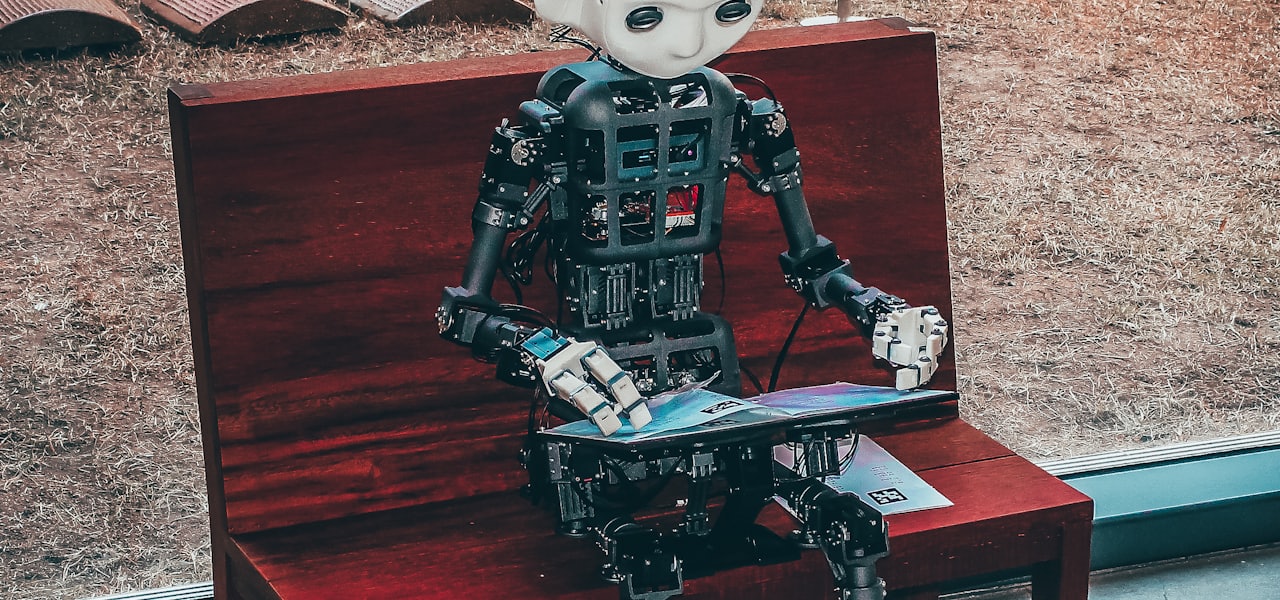
OpenCog is a project that aims to build an open source artificial intelligence framework. OpenCog Prime is an architecture for robot and virtual embodied cognition that defines a set of interacting components designed to give rise to human-equivalent artificial general intelligence (AGI) as an emergent phenomenon of the whole system. OpenCog Prime's design is primarily the work of Ben Goertzel while the OpenCog framework is intended as a generic framework for broad-based AGI research. Research utilizing OpenCog has been published in journals and presented at conferences and workshops including the annual Conference on Artificial General Intelligence. OpenCog is released under the terms of the GNU Affero General Public License. OpenCog is in use by more than 50 companies, including Huawei and Cisco. == Origin == OpenCog was originally based on the release in 2008 of the source code of the proprietary "Novamente Cognition Engine" (NCE) of Novamente LLC. The original NCE code is discussed in the PLN book (ref below). Ongoing development of OpenCog is supported by Artificial General Intelligence Research Institute (AGIRI), the Google Summer of Code project, Hanson Robotics, SingularityNET and others. == Components == OpenCog consists of: A graph database, dubbed the AtomSpace, that holds "atoms" (that is, terms, atomic formulas, sentences and relationships) together with their "values" (valuations or interpretations, which can be thought of as per-atom key-value databases). An example of a value would be a truth value. Atoms are globally unique, immutable and are indexed (searchable); values are fleeting and changeable. A collection of pre-defined atoms, termed Atomese, used for generic knowledge representation, such as conceptual graphs and semantic networks, as well as to represent and store the rules (in the sense of term rewriting) needed to manipulate such graphs. A collection of pre-defined atoms that encode a type subsystem, including type constructors and function types. These are used to specify the types of variables, terms and expressions, and are used to specify the structure of generic graphs containing variables. A collection of pre-defined atoms that encode both functional and imperative programming styles. These include the lambda abstraction for binding free variables into bound variables, as well as for performing beta reduction. A collection of pre-defined atoms that encode a satisfiability modulo theories solver, built in as a part of a generic graph query engine, for performing graph and hypergraph pattern matching (isomorphic subgraph discovery). This generalizes the idea of a structured query language (SQL) to the domain of generic graphical queries; it is an extended form of a graph query language. A generic rule engine, including a forward chainer and a backward chainer, that is able to chain together rules. The rules are exactly the graph queries of the graph query subsystem, and so the rule engine vaguely resembles a query planner. It is designed so as to allow different kinds of inference engines and reasoning systems to be implemented, such as Bayesian inference or fuzzy logic, or practical tasks, such as constraint solvers or motion planners. An attention allocation subsystem based on economic theory, termed ECAN. This subsystem is used to control the combinatorial explosion of search possibilities that are met during inference and chaining. An implementation of a probabilistic reasoning engine based on probabilistic logic networks. The current implementation uses the rule engine to chain together specific rules of logical inference (such as modus ponens), together with some very specific mathematical formulas assigning a probability and a confidence to each deduction. This subsystem can be thought of as a certain kind of proof assistant that works with a modified form of Bayesian inference. A probabilistic genetic program evolver called Meta-Optimizing Semantic Evolutionary Search, or MOSES. This is used to discover collections of short Atomese programs that accomplish tasks; these can be thought of as performing a kind of decision tree learning, resulting in a kind of decision forest, or rather, a generalization thereof. A natural language input system consisting of Link Grammar, and partly inspired by both Meaning-Text Theory as well as Dick Hudson's Word Grammar, which encodes semantic and syntactic relations in Atomese. A natural language generation system. An implementation of Psi-Theory for handling emotional states, drives and urges, dubbed OpenPsi. Interfaces to Hanson Robotics robots, including emotion modelling via OpenPsi. This includes the Loving AI project, used to demonstrate meditation techniques. == Organization and funding == In 2008, the Machine Intelligence Research Institute (MIRI), formerly called Singularity Institute for Artificial Intelligence (SIAI), sponsored several researchers and engineers. Many contributions from the open source community have been made since OpenCog's involvement in the Google Summer of Code in 2008 and 2009. Currently MIRI no longer supports OpenCog. OpenCog has received funding and support from several sources, including the Hong Kong government, Hong Kong Polytechnic University, the Jeffrey Epstein VI Foundation and Hanson Robotics. In 2013, OpenCog began providing AI solutions to Hanson Robotics, and in 2017, OpenCog became a founding member of SingularityNET. == Applications == Similar to other cognitive architectures, the main purpose is to create virtual humans, which are three dimensional avatar characters. The goal is to mimic behaviors like emotions, gestures and learning. For example, the emotion module in the software was only programmed because humans have emotions. Artificial General Intelligence can be realized if it simulates intelligence of humans. The self-description of the OpenCog project provides additional possible applications which are going into the direction of natural language processing and the simulation of a dog.
BevQ
BevQ is a queue management mobile application developed by Faircode Technologies of Kochi, Kerala. It is provided by the Kerala State Beverages Corporation under Government of Kerala. == History == This app was released together by the Government of Kerala and the Kerala State Beverages Corporation in order to implement social distancing in the liquor stores Kerala in the case of the COVID-19 pandemic in Kerala and to reduce the congestion of people. The BevQ App was released by Faircode Technologies on 27 May 2020 on the Google Play Store. In January 2021, the app was withdrawn as bars had opened. In June 2021, there was a commitment from the Kerala CM that the App will be relaunched again. It has been reported that over 132,000 new users downloaded the app in the 48 hours after the announcement. == Achievements == The BEVQ app, which works only in the state of Kerala, beat all other Indian food and drink apps in 2020 to see the highest growth in year-on-year sessions, according to the State of Mobile 2021 report by App Annie. The app even beat the likes of Domino’s, which is used all across India. Around 300 government Liquor shops and 900 private liquor shops were enlisted in the platform. More than 200 million unique users registered in the platform. About 250,000 tokens were given out a day.
Gödel machine
A Gödel machine is a hypothetical self-improving computer program that solves problems in an optimal way. It uses a recursive self-improvement protocol in which it rewrites its own code when it can prove the new code provides a better strategy. The machine was invented by Jürgen Schmidhuber (first proposed in 2003), but is named after Kurt Gödel who inspired the mathematical theories. The Gödel machine is often discussed when dealing with issues of meta-learning, also known as "learning to learn." Applications include automating human design decisions and transfer of knowledge between multiple related tasks, and may lead to design of more robust and general learning architectures. Though theoretically possible, no full implementation has been created. The Gödel machine is often compared with Marcus Hutter's AIXI, another formal specification for an artificial general intelligence. Schmidhuber points out that the Gödel machine could start out by implementing AIXItl as its initial sub-program, and self-modify after it finds proof that another algorithm for its search code will be better. == Limitations == Traditional problems solved by a computer only require one input and provide some output. Computers of this sort had their initial algorithm hardwired. This does not take into account the dynamic natural environment, and thus was a goal for the Gödel machine to overcome. The Gödel machine has limitations of its own, however. According to Gödel's First Incompleteness Theorem, any formal system that encompasses arithmetic is either flawed or allows for statements that cannot be proved in the system. Hence even a Gödel machine with unlimited computational resources must ignore those self-improvements whose effectiveness it cannot prove. == Variables of interest == There are three variables that are particularly useful in the run time of the Gödel machine. At some time t {\displaystyle t} , the variable time {\displaystyle {\text{time}}} will have the binary equivalent of t {\displaystyle t} . This is incremented steadily throughout the run time of the machine. Any input meant for the Gödel machine from the natural environment is stored in variable x {\displaystyle x} . It is likely the case that x {\displaystyle x} will hold different values for different values of variable time {\displaystyle {\text{time}}} . The outputs of the Gödel machine are stored in variable y {\displaystyle y} , where y ( t ) {\displaystyle y(t)} would be the output bit-string at some time t {\displaystyle t} . At any given time t {\displaystyle t} , where ( 1 ≤ t ≤ T ) {\displaystyle (1\leq t\leq T)} , the goal is to maximize future success or utility. A typical utility function follows the pattern u ( s , E n v ) : S × E → R {\displaystyle u(s,\mathrm {Env} ):S\times E\rightarrow \mathbb {R} } : u ( s , E n v ) = E μ [ ∑ τ = time T r ( τ ) ∣ s , E n v ] {\displaystyle u(s,\mathrm {Env} )=E_{\mu }{\Bigg [}\sum _{\tau ={\text{time}}}^{T}r(\tau )\mid s,\mathrm {Env} {\Bigg ]}} where r ( t ) {\displaystyle r(t)} is a real-valued reward input (encoded within s ( t ) {\displaystyle s(t)} ) at time t {\displaystyle t} , E μ [ ⋅ ∣ ⋅ ] {\displaystyle E_{\mu }[\cdot \mid \cdot ]} denotes the conditional expectation operator with respect to some possibly unknown distribution μ {\displaystyle \mu } from a set M {\displaystyle M} of possible distributions ( M {\displaystyle M} reflects whatever is known about the possibly probabilistic reactions of the environment), and the above-mentioned time = time ( s ) {\displaystyle {\text{time}}=\operatorname {time} (s)} is a function of state s {\displaystyle s} which uniquely identifies the current cycle. Note that we take into account the possibility of extending the expected lifespan through appropriate actions. == Instructions used by proof techniques == The nature of the six proof-modifying instructions below makes it impossible to insert an incorrect theorem into proof, thus trivializing proof verification. === get-axiom(n) === Appends the n-th axiom as a theorem to the current theorem sequence. Below is the initial axiom scheme: Hardware Axioms formally specify how components of the machine could change from one cycle to the next. Reward Axioms define the computational cost of hardware instruction and the physical cost of output actions. Related Axioms also define the lifetime of the Gödel machine as scalar quantities representing all rewards/costs. Environment Axioms restrict the way new inputs x are produced from the environment, based on previous sequences of inputs y. Uncertainty Axioms/String Manipulation Axioms are standard axioms for arithmetic, calculus, probability theory, and string manipulation that allow for the construction of proofs related to future variable values within the Gödel machine. Initial State Axioms contain information about how to reconstruct parts or all of the initial state. Utility Axioms describe the overall goal in the form of utility function u. === apply-rule(k, m, n) === Takes in the index k of an inference rule (such as Modus tollens, Modus ponens), and attempts to apply it to the two previously proved theorems m and n. The resulting theorem is then added to the proof. === delete-theorem(m) === Deletes the theorem stored at index m in the current proof. This helps to mitigate storage constraints caused by redundant and unnecessary theorems. Deleted theorems can no longer be referenced by the above apply-rule function. === set-switchprog(m, n) === Replaces switchprog S pm:n, provided it is a non-empty substring of S p. === check() === Verifies whether the goal of the proof search has been reached. A target theorem states that given the current axiomatized utility function u (Item 1f), the utility of a switch from p to the current switchprog would be higher than the utility of continuing the execution of p (which would keep searching for alternative switchprogs). === state2theorem(m, n) === Takes in two arguments, m and n, and attempts to convert the contents of Sm:n into a theorem. == Example applications == === Time-limited NP-hard optimization === The initial input to the Gödel machine is the representation of a connected graph with a large number of nodes linked by edges of various lengths. Within given time T it should find a cyclic path connecting all nodes. The only real-valued reward will occur at time T. It equals 1 divided by the length of the best path found so far (0 if none was found). There are no other inputs. The by-product of maximizing expected reward is to find the shortest path findable within the limited time, given the initial bias. === Fast theorem proving === Prove or disprove as quickly as possible that all even integers > 2 are the sum of two primes (Goldbach’s conjecture). The reward is 1/t, where t is the time required to produce and verify the first such proof. === Maximizing expected reward with bounded resources === A cognitive robot that needs at least 1 liter of gasoline per hour interacts with a partially unknown environment, trying to find hidden, limited gasoline depots to occasionally refuel its tank. It is rewarded in proportion to its lifetime, and dies after at most 100 years or as soon as its tank is empty or it falls off a cliff, and so on. The probabilistic environmental reactions are initially unknown but assumed to be sampled from the axiomatized Speed Prior, according to which hard-to-compute environmental reactions are unlikely. This permits a computable strategy for making near-optimal predictions. One by-product of maximizing expected reward is to maximize expected lifetime.
World model (artificial intelligence)
A world model in artificial intelligence is a machine learning system that builds an internal representation of an environment. The model predicts how that environment changes over time in response to actions. Researchers design world models to help agents plan, reason, and act without constant real-world trial and error. World models differ from systems that merely classify or generate outputs. They simulate dynamics such as physics, object interactions, and causality. Early ideas date to the 1990s. Modern versions power robots, autonomous driving, and interactive video generation. == History == Jürgen Schmidhuber introduced the term world model in machine learning in 1990. He proposed recurrent neural networks that predict future states from observations and use those predictions to train agents. David Ha and Schmidhuber revived the concept in a 2018 paper. Their agents learned to drive virtual cars and play video games inside self-generated simulations. Yann LeCun advanced the idea in a 2022 position paper titled "A Path Towards Autonomous Machine Intelligence". He argued that intelligence requires predictive models of the world rather than pure pattern matching. LeCun proposed the joint embedding predictive architecture (JEPA) as a practical foundation. LeCun and collaborators developed several JEPA variants. V-JEPA 2 reached state-of-the-art performance on video understanding and physical reasoning at the time. It supports zero-shot robot control in unfamiliar environments. Introduced in March 2026, LeWorldModel trains stably end-to-end from raw pixels and uses two loss terms and avoids hand-crafted heuristics. LeCun founded Advanced Machine Intelligence Labs in 2026 to further develop world models. Google DeepMind introduced Genie in 2024. The model learned interactive environments from unlabeled internet videos. Genie 2 followed in late 2024 and added three-dimensional generation. The Genie series set benchmarks for general-purpose simulation. Genie 3 was introduced in August 2025. It produces photorealistic, real-time interactive worlds from text prompts which are displayed at 24 frames per second and explored in real time with text or image prompts. The model supports persistent three-dimensional worlds and real-time interaction. Waymo adopted Genie 3 in February 2026 and used it to create a specialized world model for autonomous driving simulation, called the Waymo World Model. It produces synchronized camera and lidar outputs and creates edge cases that real robotaxis rarely encounter. The edge cases were reported to be unusual by PCMag. General Intuition announced a $133.7 million seed round. World Labs raised $1 billion. AMI raised $1.03 billion. In April 2026, Alibaba announced Happy Oyster, its world model designed for real-time and “flowy” world model. It includes a directing mode for world building based on text and image prompts and a wandering mode for exploring the resulting world. It can generate 3-minute in-world video clips. Also in April, World Labs, co-founded by Li Fei Fei, unveiled Spark 2.0, an open-source 3D Gaussian splatting rendering engine that targets smartphone-class devices. In June 2026, Nvidia released Cosmos 3, a family of open-weight models. It combines previously independent physical reasoning, world simulation, and action generation. Cosmos 3 integrates can process and generate text, image, video, audio, and action sequences. The model employs a Mixture-of-Transformers" (MoT) approach. An autoregressive (AR) transformer handles reasoning and next-token prediction, while a diffusion transformer (DT) does multimodal generation. Encoders (ViT for vision, VAE for visual/audio, and domain-specific for actions) and generate a shared representation space using 3D multi-dimensional rotary position embedding (mRoPE) for spatial and temporal information. The family includes Cosmos3-Nano (16B parameters) for workstations; Cosmos3-Super (64B parameters) for research. == Architecture == World models process raw sensory data such as video frames or lidar scans. They compress this input into compact latent representations. The system then predicts future representations rather than pixel-by-pixel reconstructions. Many modern world models use joint embedding predictive architecture (JEPA). An encoder turns observations into embeddings. A predictor estimates one or a suite of embeddings from the current one and an action. In some cases a critic chooses one embedding as the best result. A regularizer keeps embeddings well-behaved. The model trains by minimizing prediction error in embedding space. This approach avoids the high cost of generating every detail. Some architectures add explicit components. A fast reactive path handles immediate responses. A slower deliberative path performs longer-horizon planning. Video prediction accuracy or robot success rates are key metrics, but do not always predict real-world performance. Generative world models such as Genie 3 combine these with a simulator. They accept text prompts or layouts and output consistent video, lidar, or three-dimensional scenes. World models often train with self-supervised learning. They use large unlabeled datasets of video or robot interactions. Self-supervised learning can speed learning. Reinforcement learning can fine-tune a model for specific tasks. == Applications == World models support robot learning. Agents train inside simulations and transfer skills to the physical world. This reduces the need for dangerous or expensive real-world trials. Autonomous vehicles use world models to test rare events. Waymo's system simulates tornadoes or unusual pedestrian behavior. Companies train planners without putting vehicles on public roads. Interactive entertainment benefits from world models. Genie 3 lets users generate playable environments from simple descriptions. Game studios prototype levels faster. Scientific simulation gains from these models. Researchers model physical systems or biological processes at scale. Planners in logistics or urban design test strategies inside accurate digital twins. == Comparison with large language models == Both world models and large language models (LLMs) use inferencing on their inputs to make predictions. LLMs operate on textual inputs. They predict the next token in text sequences. They excel at language-oriented tasks such as translation or summarization. However, they lack understanding of physics. World models operate on sensor inputs such as pixels. They predict state changes in that data in latent space. This design supports planning and causal reasoning. LLMs generate fluent text but often fail at consistent physical predictions. Their architecture employs transformers with refinements such as mixture of experts. World models divide an inferencing task into work performed by encoders, predictors, simulators, and other pieces. They typically handle multimodal inputs such as video, lidar, radar, and audio, guided by textual prompting. LLMs power chatbots and code assistants. World models drive embodied agents that act in dynamic environments, such as autonomous driving. The two may be combined in hybrid systems. For example, a LLM handles instructions, while a world model manages low-level control. World model proponents such as LeCun claim that because LLMs are trained only on text, they have no ability to predict anything beyond text, such as real-world events. == Benchmarks == World model benchmarks test physical understanding, long-term consistency, planning, and generalization from sensor data. Meta introduced three benchmarks for V-JEPA 2. IntPhys 2 measures a model's ability to detect physics violations. It presents pairs of videos that diverge when one breaks physical rules. Humans score near 100% accuracy. V-JEPA 2 achieves little better than random chance on many conditions. Minimal Video Pairs (MVPBench) tests physical understanding through multiple-choice questions based on short video clips. It probes object interactions and causality. Something-Something tests action recognition. Epic-Kitchens-100 tests human action anticipation. DeepMind benchmark: Interactive evaluation measures consistency over minutes of interaction, memory of off-screen objects, and response to user actions or text prompts. Waymo benchmark: Output generation quality: Metrics include realism, controllability (via text prompts), and usefulness for training planners in simulated worlds. However, pixel reconstruction error rate with episodic rewards often fails. Other: Epic-Kitchens-100 (often measured with Recall@5) Ego4D 50 Salads, Breakfast, etc. Potential benchmarks: Zero-shot transfer to robots Long-horizon planning Implausible prediction rate
SUPS
In computational neuroscience, SUPS (for Synaptic Updates Per Second) or formerly CUPS (Connections Updates Per Second) is a measure of a neuronal network performance, useful in fields of neuroscience, cognitive science, artificial intelligence, and computer science. == Computing == For a processor or computer designed to simulate a neural network SUPS is measured as the product of simulated neurons N {\displaystyle N} and average connectivity c {\displaystyle c} (synapses) per neuron per second: S U P S = c × N {\displaystyle SUPS=c\times N} Depending on the type of simulation it is usually equal to the total number of synapses simulated. In an "asynchronous" dynamic simulation if a neuron spikes at υ {\displaystyle \upsilon } Hz, the average rate of synaptic updates provoked by the activity of that neuron is υ c N {\displaystyle \upsilon cN} . In a synchronous simulation with step Δ t {\displaystyle \Delta t} the number of synaptic updates per second would be c N Δ t {\displaystyle {\frac {cN}{\Delta t}}} . As Δ t {\displaystyle \Delta t} has to be chosen much smaller than the average interval between two successive afferent spikes, which implies Δ t < 1 υ N {\displaystyle \Delta t<{\frac {1}{\upsilon N}}} , giving an average of synaptic updates equal to υ c N 2 {\displaystyle \upsilon cN^{2}} . Therefore, spike-driven synaptic dynamics leads to a linear scaling of computational complexity O(N) per neuron, compared with the O(N2) in the "synchronous" case. == Records == Developed in the 1980s Adaptive Solutions' CNAPS-1064 Digital Parallel Processor chip is a full neural network (NNW). It was designed as a coprocessor to a host and has 64 sub-processors arranged in a 1D array and operating in a SIMD mode. Each sub-processor can emulate one or more neurons and multiple chips can be grouped together. At 25 MHz it is capable of 1.28 GMAC. After the presentation of the RN-100 (12 MHz) single neuron chip at Seattle 1991 Ricoh developed the multi-neuron chip RN-200. It had 16 neurons and 16 synapses per neuron. The chip has on-chip learning ability using a proprietary backdrop algorithm. It came in a 257-pin PGA encapsulation and drew 3.0 W at a maximum. It was capable of 3 GCPS (1 GCPS at 32 MHz). In 1991–97, Siemens developed the MA-16 chip, SYNAPSE-1 and SYNAPSE-3 Neurocomputer. The MA-16 was a fast matrix-matrix multiplier that can be combined to form systolic arrays. It could process 4 patterns of 16 elements each (16-bit), with 16 neuron values (16-bit) at a rate of 800 MMAC or 400 MCPS at 50 MHz. The SYNAPSE3-PC PCI card contained 2 MA-16 with a peak performance of 2560 MOPS (1.28 GMAC); 7160 MOPS (3.58 GMAC) when using three boards. In 2013, the K computer was used to simulate a neural network of 1.73 billion neurons with a total of 10.4 trillion synapses (1% of the human brain). The simulation ran for 40 minutes to simulate 1 s of brain activity at a normal activity level (4.4 on average). The simulation required 1 Petabyte of storage.
ROCm
ROCm is an Advanced Micro Devices (AMD) software stack for graphics processing unit (GPU) programming. ROCm spans several domains, including general-purpose computing on graphics processing units (GPGPU), high performance computing (HPC), and heterogeneous computing. It offers several programming models: HIP (GPU-kernel-based programming), OpenMP (directive-based programming), and OpenCL. ROCm is free, libre and open-source software (except the GPU firmware blobs), and it is distributed under various licenses. The name initially stood for Radeon Open Compute platform; however, due to Open Compute being a registered trademark, the name no longer functions as an acronym. == Background == The first GPGPU software stack from ATI/AMD was Close to Metal, which became Stream. ROCm was launched around 2016 with the Boltzmann Initiative. ROCm stack builds upon previous AMD GPU stacks; some tools trace back to GPUOpen and others to the Heterogeneous System Architecture (HSA). === Heterogeneous System Architecture Intermediate Language === HSAIL was aimed at producing a middle-level, hardware-agnostic intermediate representation that could be JIT-compiled to the eventual hardware (GPU, FPGA...) using the appropriate finalizer. This approach was dropped for ROCm: now it builds only GPU code, using LLVM, and its AMDGPU backend that was upstreamed, although there is still research on such enhanced modularity with LLVM MLIR. == Programming abilities == ROCm as a stack ranges from the kernel driver to the end-user applications. AMD has introductory videos about AMD GCN hardware, and ROCm programming via its learning portal. One of the best technical introductions about the stack and ROCm/HIP programming, remains, to date, to be found on Reddit. == Hardware support == ROCm is primarily targeted at discrete professional GPUs, but consumer GPUs and APUs of the same architecture as a supported professional GPU are known to work with ROCm. For example, all professional GPUs of the RDNA 2 architecture are officially supported by ROCm 5.x; users report that Consumer RDNA2 units such as the Radeon 6800M APU and the Radeon 6700XT GPU also work. === Professional-grade GPUs === === Consumer-grade GPUs === == Software ecosystem == === Machine learning === Various deep learning frameworks have a ROCm backend: PyTorch TensorFlow ONNX MXNet CuPy MIOpen Caffe Iree (which uses LLVM Multi-Level Intermediate Representation (MLIR)) llama.cpp === Supercomputing === ROCm is gaining significant traction in the top 500. ROCm is used with the Exascale supercomputers El Capitan and Frontier. Some related software is to be found at AMD Infinity hub. === Other acceleration & graphics interoperation === As of version 3.0, Blender can now use HIP compute kernels for its renderer cycles. === Other languages === ==== Julia ==== Julia has the AMDGPU.jl package, which integrates with LLVM and selects components of the ROCm stack. Instead of compiling code through HIP, AMDGPU.jl uses Julia's compiler to generate LLVM IR directly, which is later consumed by LLVM to generate native device code. AMDGPU.jl uses ROCr's HSA implementation to upload native code onto the device and execute it, similar to how HIP loads its own generated device code. AMDGPU.jl also supports integration with ROCm's rocBLAS (for BLAS), rocRAND (for random number generation), and rocFFT (for FFTs). Future integration with rocALUTION, rocSOLVER, MIOpen, and certain other ROCm libraries is planned. === Software distribution === ==== Official ==== Installation instructions are provided for Linux and Windows in the official AMD ROCm documentation. ROCm software is currently spread across several public GitHub repositories. Within the main public meta-repository, there is an XML manifest for each official release: using git-repo, a version control tool built on top of Git, is the recommended way to synchronize with the stack locally. AMD starts distributing containerized applications for ROCm, notably scientific research applications gathered under AMD Infinity Hub. AMD distributes itself packages tailored to various Linux distributions. ==== Third-party ==== There is a growing third-party ecosystem packaging ROCm. Linux distributions are officially packaging (natively) ROCm, with various degrees of advancement: Arch Linux, Gentoo, Debian, Fedora , GNU Guix, and NixOS. There are Spack packages. == Components == There is one kernel-space component, ROCk, and the rest - there is roughly a hundred components in the stack - is made of user-space modules. The unofficial typographic policy is to use: uppercase ROC lowercase following for low-level libraries, i.e. ROCt, and the contrary for user-facing libraries, i.e. rocBLAS. AMD is active developing with the LLVM community, but upstreaming is not instantaneous, and as of January 2022, is still lagging. AMD still officially packages various LLVM forks for parts that are not yet upstreamed – compiler optimizations destined to remain proprietary, debug support, OpenMP offloading, etc. === Low-level === ==== ROCk – Kernel driver ==== ==== ROCm – Device libraries ==== Support libraries implemented as LLVM bitcode. These provide various utilities and functions for math operations, atomics, queries for launch parameters, on-device kernel launch, etc. ==== ROCt – Thunk ==== The thunk is responsible for all the thinking and queuing that goes into the stack. ==== ROCr – Runtime ==== The ROC runtime is a set of APIs/libraries that allows the launch of compute kernels by host applications. It is AMD's implementation of the HSA runtime API. It is different from the ROC Common Language Runtime. ==== ROCm – CompilerSupport ==== ROCm code object manager is in charge of interacting with LLVM intermediate representation. === Mid-level === ==== ROCclr Common Language Runtime ==== The common language runtime is an indirection layer adapting calls to ROCr on Linux and PAL on windows. It used to be able to route between different compilers, like the HSAIL-compiler. It is now being absorbed by the upper indirection layers (HIP and OpenCL). ==== OpenCL ==== ROCm ships its installable client driver (ICD) loader and an OpenCL implementation bundled together. As of January 2022, ROCm 4.5.2 ships OpenCL 2.2, and is lagging behind competition. ==== HIP – Heterogeneous Interface for Portability ==== The AMD implementation for its GPUs is called HIPAMD. There is also a CPU implementation mostly for demonstration purposes. ==== HIPCC ==== HIP builds a `HIPCC` compiler that either wraps Clang and compiles with LLVM open AMDGPU backend, or redirects to the NVIDIA compiler. ==== HIPIFY ==== HIPIFY is a source-to-source compiling tool. It translates CUDA to HIP and reverse, either using a Clang-based tool, or a sed-like Perl script. ==== GPUFORT ==== Like HIPIFY, GPUFORT is a tool compiling source code into other third-generation-language sources, allowing users to migrate from CUDA Fortran to HIP Fortran. It is also in the repertoire of research projects, even more so. === High-level === ROCm high-level libraries are usually consumed directly by application software, such as machine learning frameworks. Most of the following libraries are in the General Matrix Multiply (GEMM) category, which GPU architecture excels at. The majority of these user-facing libraries comes in dual-form: hip for the indirection layer that can route to Nvidia hardware, and roc for the AMD implementation. ==== rocBLAS / hipBLAS ==== rocBLAS and hipBLAS are central in high-level libraries, it is the AMD implementation for Basic Linear Algebra Subprograms. It uses the library Tensile privately. ==== rocSOLVER / hipSOLVER ==== This pair of libraries constitutes the LAPACK implementation for ROCm and is strongly coupled to rocBLAS. === Utilities === ROCm developer tools: Debug, tracer, profiler, System Management Interface, Validation suite, Cluster management. GPUOpen tools: GPU analyzer, memory visualizer... External tools: radeontop (TUI overview) == Comparison with competitors == ROCm competes with other GPU computing stacks: Nvidia CUDA and Intel OneAPI. === Nvidia CUDA === Nvidia's CUDA is closed-source, whereas AMD ROCm is open source. There is open-source software built on top of the closed-source CUDA, for instance RAPIDS. CUDA is able to run on consumer GPUs, whereas ROCm support is mostly offered for professional hardware such as AMD Instinct and AMD Radeon Pro. Nvidia provides a C/C++-centered frontend and its Parallel Thread Execution (PTX) LLVM GPU backend as the Nvidia CUDA Compiler (NVCC). === Intel OneAPI === All the oneAPI corresponding libraries are published on its GitHub Page. ==== Unified Acceleration Foundation (UXL) ==== Unified Acceleration Foundation (UXL) is a new technology consortium that are working on the continuation of the OneAPI initiative, with the goal to create a new open standard accelerator software ecosystem, related open standards and specification projects through Working Groups and Specia
Learning curve (machine learning)
In machine learning (ML), a learning curve (or training curve) is a graphical representation that shows how a model's performance on a training set (and usually a validation set) changes with the number of training iterations (epochs) or the amount of training data. Typically, the number of training epochs or training set size is plotted on the x-axis, and the value of the loss function (and possibly some other metric such as the cross-validation score) on the y-axis. Synonyms include error curve, experience curve, improvement curve and generalization curve. More abstractly, learning curves plot the difference between learning effort and predictive performance, where "learning effort" usually means the number of training samples, and "predictive performance" means accuracy on testing samples. Learning curves have many useful purposes in ML, including: choosing model parameters during design, adjusting optimization to improve convergence, and diagnosing problems such as overfitting (or underfitting). Learning curves can also be tools for determining how much a model benefits from adding more training data, and whether the model suffers more from a variance error or a bias error. If both the validation score and the training score converge to a certain value, then the model will no longer significantly benefit from more training data. == Formal definition == When creating a function to approximate the distribution of some data, it is necessary to define a loss function L ( f θ ( X ) , Y ) {\displaystyle L(f_{\theta }(X),Y)} to measure how good the model output is (e.g., accuracy for classification tasks or mean squared error for regression). We then define an optimization process which finds model parameters θ {\displaystyle \theta } such that L ( f θ ( X ) , Y ) {\displaystyle L(f_{\theta }(X),Y)} is minimized, referred to as θ ∗ {\displaystyle \theta ^{}} . === Training curve for amount of data === If the training data is { x 1 , x 2 , … , x n } , { y 1 , y 2 , … y n } {\displaystyle \{x_{1},x_{2},\dots ,x_{n}\},\{y_{1},y_{2},\dots y_{n}\}} and the validation data is { x 1 ′ , x 2 ′ , … x m ′ } , { y 1 ′ , y 2 ′ , … y m ′ } {\displaystyle \{x_{1}',x_{2}',\dots x_{m}'\},\{y_{1}',y_{2}',\dots y_{m}'\}} , a learning curve is the plot of the two curves i ↦ L ( f θ ∗ ( X i , Y i ) ( X i ) , Y i ) {\displaystyle i\mapsto L(f_{\theta ^{}(X_{i},Y_{i})}(X_{i}),Y_{i})} i ↦ L ( f θ ∗ ( X i , Y i ) ( X i ′ ) , Y i ′ ) {\displaystyle i\mapsto L(f_{\theta ^{}(X_{i},Y_{i})}(X_{i}'),Y_{i}')} where X i = { x 1 , x 2 , … x i } {\displaystyle X_{i}=\{x_{1},x_{2},\dots x_{i}\}} === Training curve for number of iterations === Many optimization algorithms are iterative, repeating the same step (such as backpropagation) until the process converges to an optimal value. Gradient descent is one such algorithm. If θ i ∗ {\displaystyle \theta _{i}^{}} is the approximation of the optimal θ {\displaystyle \theta } after i {\displaystyle i} steps, a learning curve is the plot of i ↦ L ( f θ i ∗ ( X , Y ) ( X ) , Y ) {\displaystyle i\mapsto L(f_{\theta _{i}^{}(X,Y)}(X),Y)} i ↦ L ( f θ i ∗ ( X , Y ) ( X ′ ) , Y ′ ) {\displaystyle i\mapsto L(f_{\theta _{i}^{}(X,Y)}(X'),Y')}